
Harmonic Reduction in 3 Phase Single Switch Boost PFC Converter
Keywords:
Power-factor-correction, three-phase, efficiency, Booster converter, Harmonic reduction signalAbstract
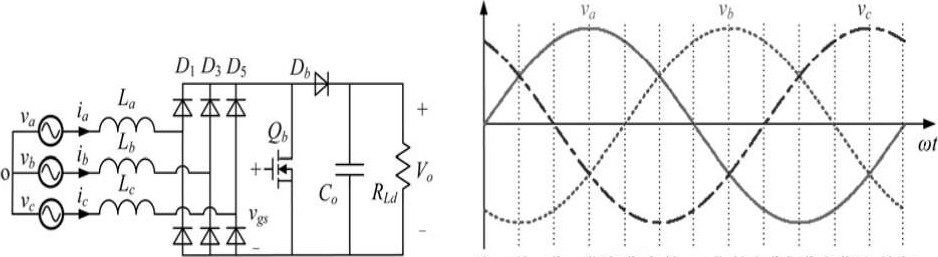
Now-a- days semiconductor switches, new multilevel converter topologies and advanced converter modulation techniques have contributed to the expansion of voltage source converters (VSCs) to higher voltage and power ratings for utility-scale and motor drive applications. The main objective present with the Boost star three phase single switch converter is to reduce the harmonics and increase the performance of the Boost star 3- phase single switch converter. In this paper we reduce the harmonics in the boost Star by using pulse Width modulation technique. The paper deals with harmonic elimination pulse width modulation (HE-PWM) for three-phase, two-level boost star converter topologies. HE-PWM for the three-phase two-level converter is initially treated. Different formulations of HE-PWM based on relaxing the symmetry requirements, previously imposed, are investigated. New solution sets are calculated by imposing half-wave symmetry or completely eliminating the symmetry requirements. Based on multiple harmonic performance factors, an evaluation identifies the solution sets that exhibit superior harmonic performance. The theoretical and experimental analysis are verified through experimental work on a laboratory prtotype.
Downloads
Published
Issue
Section
License
Copyright of articles published in the International Journal for Interdisciplinary Sciences and Engineering Applications (IJISEA) belongs to the Journal upon acceptance and publication, in accordance with the applicable author copyright agreement.
Authors may reuse their published work for educational and non-commercial purposes, provided that the original publication in IJISEA is properly acknowledged and the applicable permissions are obtained.
Any commercial reproduction, redistribution, republication, or other reuse beyond the permitted rights requires prior written permission from the Editorial Office.
The journal provides open access to its published articles for reading and scholarly reference. Access to published content does not automatically grant unrestricted reproduction or redistribution rights.
All rights not expressly granted remain reserved by the Journal.
 DOI Find a publication by DOI
