
An Overview of Molecular Docking - A Novel Technique for Drug Discovery
Keywords:
Drug discovery, Molecular docking, ADMET, Binding, ConformationsAbstract
Computer-aided drug design and discovery (CADDO) is a fast developing discipline that has
experienced several achievements in recent years. In addition to academics, several large drug
manufacturers use CADDO for lead development. The emergence Of molecular informatics,
genomics, and proteomics is driving efforts toward modern-era drug discovery and development.
Over the last two decades, enormous research has been conducted to investigate alternative
docking methods and predict the active site Of the molecule. Several docking tools have been
created to show the 3D structure of the molecule, and docking score may also be assessed using
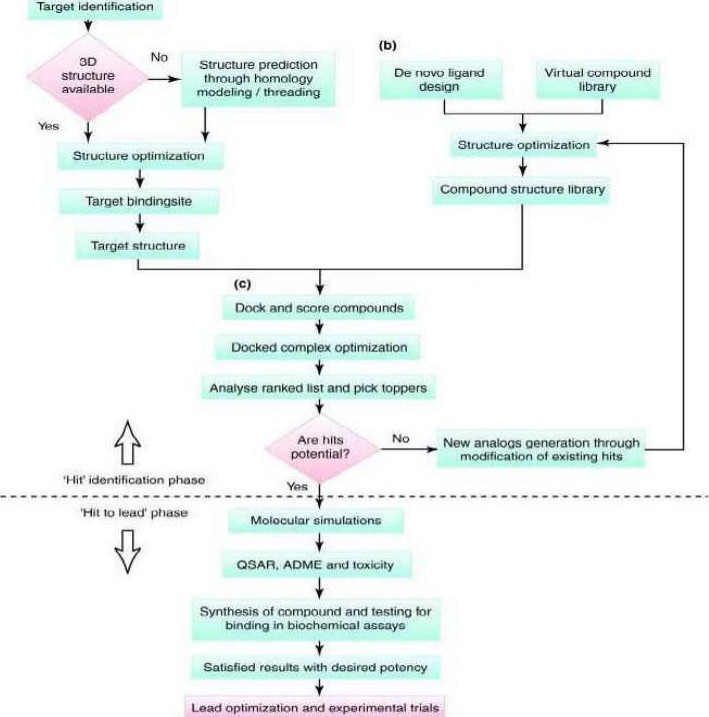
various computational approaches. Molecular Docking is a type of structure-based virtual
screening (SBVS) that employs computer-generated three-dimensional structures containing
biornolecules to incorporate them in a target structure together in number of locations,
conformations, and orientations. Protein-ligand docking is a novel idea with several applications. It
serves as an active research domain due to its importance in structure-based drug design (SBDD),
lead optimization, biochemical pathway evaluation, and De Novo drug design. The entire
explanation of Molecular Docking is mentioned in this Review. The binding mechanism and affinity
Of the complex generated are evaluated Via Molecular Docking, Which aids in the Molecular
Recognition process docking towards the development Of novel drug leads.
Downloads
Published
Issue
Section
License
Copyright of articles published in the International Journal for Interdisciplinary Sciences and Engineering Applications (IJISEA) belongs to the Journal upon acceptance and publication, in accordance with the applicable author copyright agreement.
Authors may reuse their published work for educational and non-commercial purposes, provided that the original publication in IJISEA is properly acknowledged and the applicable permissions are obtained.
Any commercial reproduction, redistribution, republication, or other reuse beyond the permitted rights requires prior written permission from the Editorial Office.
The journal provides open access to its published articles for reading and scholarly reference. Access to published content does not automatically grant unrestricted reproduction or redistribution rights.
All rights not expressly granted remain reserved by the Journal.
 DOI Find a publication by DOI
