
UPI Fraud Detection using Machine Learning
Keywords:
UPI Digital Payments, Random Forest Algorithm, K-Nearest Neighbors, Decision Tree, Machine LearningAbstract
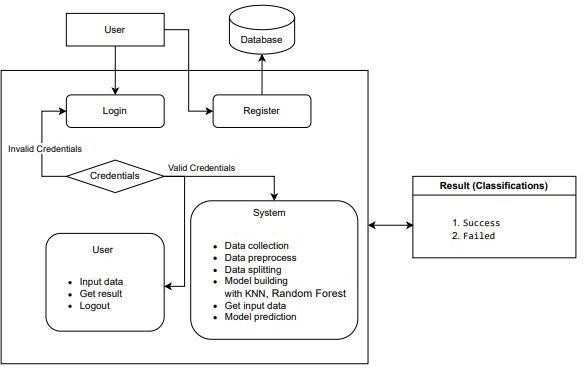
With the rapid adoption of Unified Payments Interface (UPI) for digital transactions, the risk off fraudulent activities has also increased significantly. To address this challenge, we propose a novel approach to detect UPI fraud by analyzing transaction details such as the bank book name, transaction ID, and transaction amount. Our method employs three machine learning algorithms: Random Forest, K-Nearest Neighbors (KNN), and Decision Tree. The Random Forest classifier is known for its accuracy and resilience against overfitting, making it a robust choice for this application. It processes the provided transaction details to classify the transaction outcome as either "Transaction Failed: Incorrect Details Entered" or "Transaction Successful: Details Verified and Processed. “In addition to Random Forest, the KNN algorithm provides a straightforward approach to classification based on the similarity of transaction details with previously labeled data. The Decision Tree algorithm, with its intuitive structure, offers clear decision-making pathways, enhancing interpretability. This multi-algorithm approach not only helps in preventing fraudulent transactions but also ensures that legitimate transactions are processed smoothly. The proposed model aims to enhance the security of UPI transactions, providing users with an additional layer of protection against unauthorized activities. Initial evaluations suggest that these algorithms effectively distinguish between genuine and fraudulent transactions, demonstrating their potential for integration into real-world financial systems.
Downloads
Published
Issue
Section
License
Copyright of articles published in the International Journal for Interdisciplinary Sciences and Engineering Applications (IJISEA) belongs to the Journal upon acceptance and publication, in accordance with the applicable author copyright agreement.
Authors may reuse their published work for educational and non-commercial purposes, provided that the original publication in IJISEA is properly acknowledged and the applicable permissions are obtained.
Any commercial reproduction, redistribution, republication, or other reuse beyond the permitted rights requires prior written permission from the Editorial Office.
The journal provides open access to its published articles for reading and scholarly reference. Access to published content does not automatically grant unrestricted reproduction or redistribution rights.
All rights not expressly granted remain reserved by the Journal.
 DOI Find a publication by DOI
