A Multi-Stage Hallucination Mitigation Framework for Reliable Retrieval-Augmented Generation Systems
Keywords:
Retrieval-Augmented Generation, Hallucination Mitigation, Large Language Models, Claim Verification, RAG, Confidence Scoring, Query IntelligenceAbstract
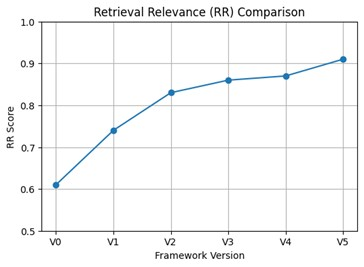
Large Language Models (LLMs) have demonstrated exceptional capabilities in natural language understanding and generation. However, despite their effectiveness, LLMs frequently suffer from hallucinations, generating information that appears plausible but lacks factual grounding. Retrieval-Augmented Generation (RAG) systems address this limitation by incorporating external knowledge during response generation. Nevertheless, existing RAG systems remain vulnerable to hallucinations due to irrelevant retrieval, incomplete contextual evidence, unsupported claim generation, and the absence of reliability assessment mechanisms. This paper proposes a Multi-Stage Hallucination Mitigation Framework for Reliable Retrieval-Augmented Generation Systems that progressively improves answer reliability through query intelligence, adaptive retrieval with web fallback, contextual reranking, claim-level verification, and confidence-based human escalation. To ensure scientific validity, all experimental versions maintain identical embedding, retrieval, and generation models while only introducing incremental reliability-enhancing mechanisms. Experimental evaluation conducted across six framework versions (V0–V5) demonstrates substantial improvements in retrieval relevance, answer relevance, and faithfulness while significantly reducing hallucinated responses. The proposed framework provides a scalable, domain-independent, and deployment-ready architecture suitable for educational institutions, enterprise knowledge systems, healthcare assistants, and customer support applications.
Downloads
Published
Issue
Section
License
Copyright of articles published in the International Journal for Interdisciplinary Sciences and Engineering Applications (IJISEA) belongs to the Journal upon acceptance and publication, in accordance with the applicable author copyright agreement.
Authors may reuse their published work for educational and non-commercial purposes, provided that the original publication in IJISEA is properly acknowledged and the applicable permissions are obtained.
Any commercial reproduction, redistribution, republication, or other reuse beyond the permitted rights requires prior written permission from the Editorial Office.
The journal provides open access to its published articles for reading and scholarly reference. Access to published content does not automatically grant unrestricted reproduction or redistribution rights.
All rights not expressly granted remain reserved by the Journal.
 DOI