
CODEMATE A Coding Chatbot using Generative AI
Keywords:
AI-driven insights, AI-powered coding assistant, CodeMate, Coding assistance, Human-AI collaboration, Natural language interface, Simple Language Models (SLMs)Abstract
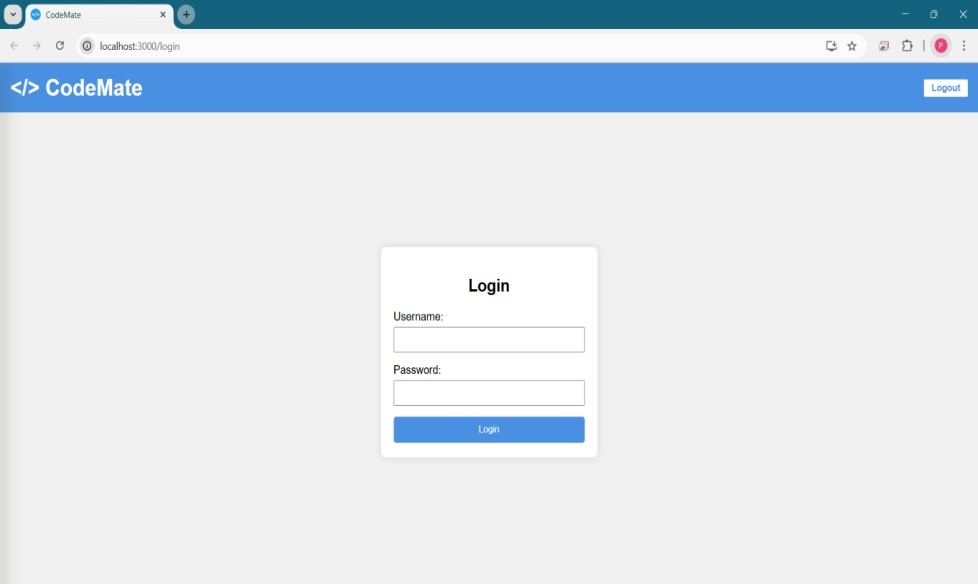
CodeMate is an AI-powered coding assistant intended to enhance the developer experience by the pursuit of pretrained Simple language model (SLMs), such as Microsoft's Phi 3. It offers a competent user interface, reminiscent of popular AI conversational interfaces like ChatGPT, where handlers can engage in natural language colloquies to seek coding assistance, debug issues, and gain sagacity on programming concepts. CodeMate's prime emphasis is to boost the coding procedure, consenting users to ask complex questions, obtain code endorsements, and rally inclusive thruput. By amalgamating the SLM's indulgence of innumerable programming languages and development environments, CodeMate can aid numerous developers, oscillating from beginners to professionals. The project aspires to bridge the gap between human creators and machine learning models, accomplishing coding more comprehensible and resourceful. By incorporating AI-driven insights, CodeMate not only expediates competent coding practices but also nurtures a unfathomable supportive of programming moralities, eventually vesting users to befall more skillful and assured in their coding adeptness.
Downloads
Published
Issue
Section
License
Copyright of articles published in the International Journal for Interdisciplinary Sciences and Engineering Applications (IJISEA) belongs to the Journal upon acceptance and publication, in accordance with the applicable author copyright agreement.
Authors may reuse their published work for educational and non-commercial purposes, provided that the original publication in IJISEA is properly acknowledged and the applicable permissions are obtained.
Any commercial reproduction, redistribution, republication, or other reuse beyond the permitted rights requires prior written permission from the Editorial Office.
The journal provides open access to its published articles for reading and scholarly reference. Access to published content does not automatically grant unrestricted reproduction or redistribution rights.
All rights not expressly granted remain reserved by the Journal.
 DOI Find a publication by DOI
