
A Robust Image Steganography Model with Three-Tier Encryption and Region-Based Embedding
Keywords:
Image Steganography, Three-Tier Encryption, Image Region Decomposition (IRD), Least Significant Bit (LSB), AES Encryption, RSA Cryptography, Region-Based Data Embedding, Secure Data Hiding, MRI Image Security, Peak Signal-to-Noise Ratio (PSNR), Structural Similarity Index (SSIM), Data Confidentiality.Abstract
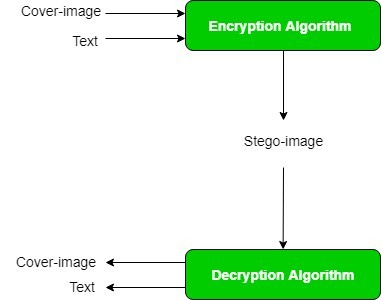
With the rapid evolution of Internet infrastructure, especially in e-healthcare, ensuring the security of sensitive medical records has become a paramount concern. Traditional cryptography protects the content of data, but not its presence. To address both, this project proposes a robust image steganography system integrating a novel Image Region Decomposition (IRD) technique with three tier encryptions (AES, RSA, and XOR/Base64). The method enhances imperceptibility and embedding capacity, particularly for grayscale MRI images. Each image is decomposed into low-, medium-, and high-intensity regions, with varying LSB embedding strategies per region to optimize data concealment. Testing on four MRI classes using PSNR, MSE, and SSIM demonstrates high fidelity and robustness against attacks. The combined use of steganography and encryption ensures both confidentiality and stealth, addressing limitations found in conventional approaches [1], [3], [6].
Downloads
Published
Issue
Section
License
Copyright of articles published in the International Journal for Interdisciplinary Sciences and Engineering Applications (IJISEA) belongs to the Journal upon acceptance and publication, in accordance with the applicable author copyright agreement.
Authors may reuse their published work for educational and non-commercial purposes, provided that the original publication in IJISEA is properly acknowledged and the applicable permissions are obtained.
Any commercial reproduction, redistribution, republication, or other reuse beyond the permitted rights requires prior written permission from the Editorial Office.
The journal provides open access to its published articles for reading and scholarly reference. Access to published content does not automatically grant unrestricted reproduction or redistribution rights.
All rights not expressly granted remain reserved by the Journal.
 DOI Find a publication by DOI
