An Experimental Examination on Diesel Engine
Keywords:
Alumina nanoparticles, diesel engine, performance, combustion characteristics, emissionsAbstract
Experimental work was done to examine the impact of diesel fuel with alumina nanoparticles on
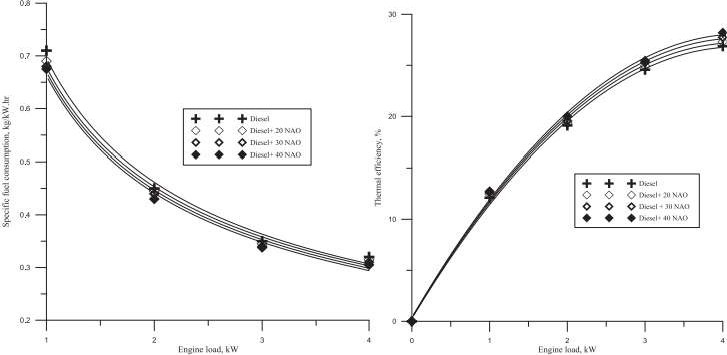
combustion characteristics, emissions and performance of diesel engine. Alumina nanoparticles were mixed With crude diesel in various weight fractlons Of 20, 30, and 40 mg/L. The engine tests showed that nano alumina addltion Of 40 ppm to pure diesel led to thermal efficiency enhancement up to 5.5% related to the pure diesel fuel. The average specific fuel consumption decrease about neat diesel fuel was found to be 3.5%, 4.5%, and 5.5% at dosing levels Of 20, 30, and 40 ppm, respectively at full load. Emissions Of smoke, HC, CO, and NOX were found to get diminished by about 17%, 25%, 30%, and 33%, respectively with 40 ppm nanoadditive about diesel operation. The smaller size of nanoparticles produce fuel stability enhancement and prevents the fuel atomization problems and the clogging in fuel injectors. The increase of alumina nanoparticle percentage in diesel fuel produced the increases in cylinder pressure, cylinder temperature, heat release rate but the decreases in ignition delay and combustion duration være shown. The concentration of 40 ppm alumina nanoparticle is recommended for achieving the optimum improvements in the engine's combustion, performance and emission characteristics
Downloads
Published
Issue
Section
License
Copyright of articles published in the International Journal for Interdisciplinary Sciences and Engineering Applications (IJISEA) belongs to the Journal upon acceptance and publication, in accordance with the applicable author copyright agreement.
Authors may reuse their published work for educational and non-commercial purposes, provided that the original publication in IJISEA is properly acknowledged and the applicable permissions are obtained.
Any commercial reproduction, redistribution, republication, or other reuse beyond the permitted rights requires prior written permission from the Editorial Office.
The journal provides open access to its published articles for reading and scholarly reference. Access to published content does not automatically grant unrestricted reproduction or redistribution rights.
All rights not expressly granted remain reserved by the Journal.
 DOI