
Diabetes Prediction Using Machine Learning
Keywords:
Diabetes Mellitus, Glucose levels, Diabetic problems(complex), Prediction Model.Abstract
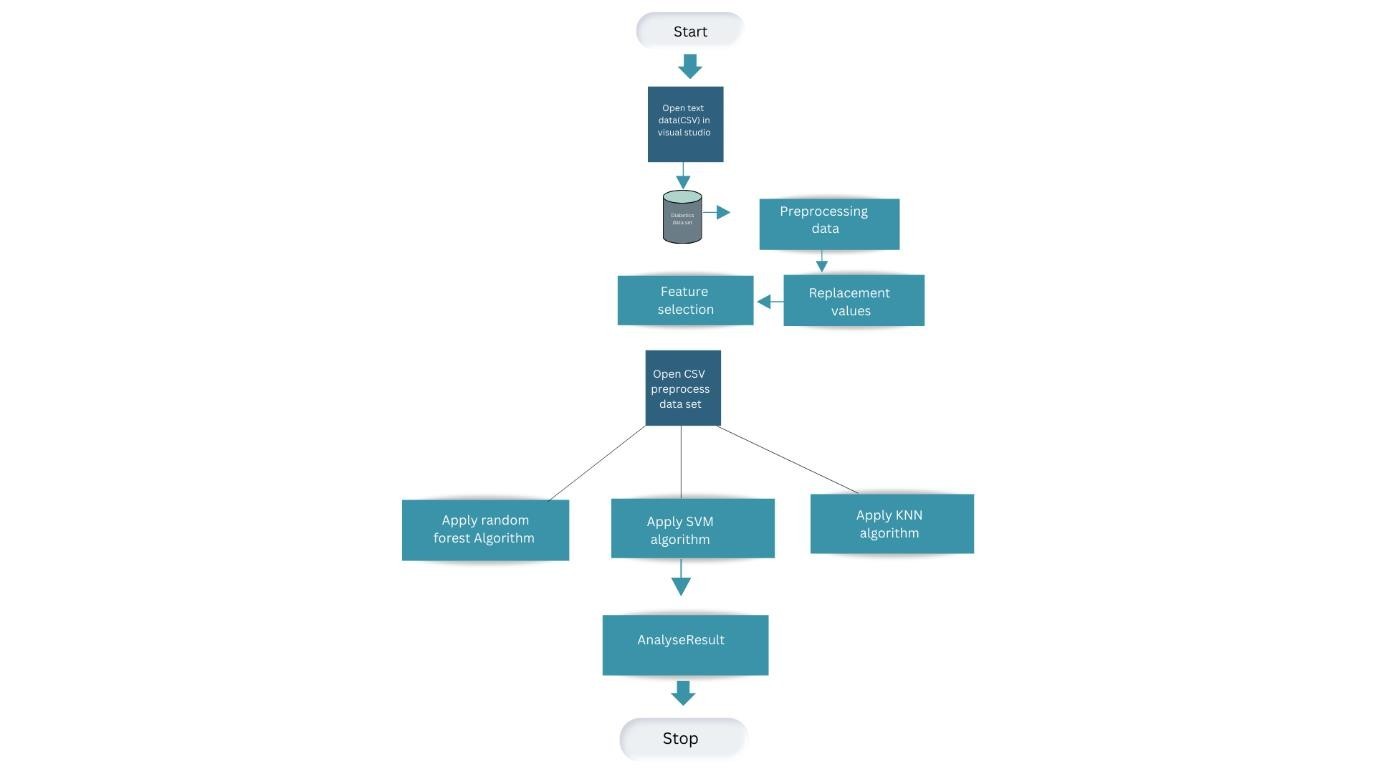
Diabetes Mellitus is among critical diseases and lots of people are suffering from this disease. Age, obesity, lack of exercise, hereditary diabetes, living style, bad diet, high blood pressure, etc. can cause Diabetes Mellitus. People having diabetes have high risk of diseases like heart disease, kidney disease, stroke, eye problem and nerve damage, etc. Type 1 and type 2 diabetes are the most common forms of the disease, but there are also other kinds, such as gestational diabetes, which occurs during pregnancy, as well as other forms. Machine learning is an emerging scientific field in data science dealing with the ways in which machines learn from experience. Current practice in hospital is to collect required information for diabetes diagnosis through various tests and appropriate treatment is provided based on diagnosis. In existing method, the classification and prediction accuracy are not so high. In this project, we have proposed a diabetes prediction models like Logistic Regression, KNN, SVM, Naivesbayes classifier, Decision tree, Random forest for better classification of diabetes which includes few external factors responsible for diabetes along with regular factors like Glucose, BMI, Age, Insulin, etc. Classification accuracy is boosted with new dataset compared to existing dataset. Further with imposed a pipeline model for diabetes prediction intended towards improving the accuracy of classification .The accuracy of the model using each of the algorithms is calculated. Then the one with a good accuracy is taken as the model for predicting the diabetes.
Downloads
Published
Issue
Section
License
Copyright of articles published in the International Journal for Interdisciplinary Sciences and Engineering Applications (IJISEA) belongs to the Journal upon acceptance and publication, in accordance with the applicable author copyright agreement.
Authors may reuse their published work for educational and non-commercial purposes, provided that the original publication in IJISEA is properly acknowledged and the applicable permissions are obtained.
Any commercial reproduction, redistribution, republication, or other reuse beyond the permitted rights requires prior written permission from the Editorial Office.
The journal provides open access to its published articles for reading and scholarly reference. Access to published content does not automatically grant unrestricted reproduction or redistribution rights.
All rights not expressly granted remain reserved by the Journal.
 DOI Find a publication by DOI
